Solutions

Document accessibility
for the work you do.

From learning materials to public reports and publications, Morf helps your team make information accessible—without adding more manual work.

Where do you work?

Choose one to explore how Morf fits your needs. Or .

Publishers · Production workflows

Publish once. Reach readers in more ways.

Turn complex publications into accessible versions while preserving meaningful structure and supporting readers with different needs.

Enterprise plan. One yearly price, built around your needs. See pricing

See it in your workflow
Select an everyday example

Complex content deserves accessible treatment.

Equations, structured tables, and figures are essential parts of a textbook. Morf can transform supported content into multiple accessible versions.

  • Analyze structure and mathematical content
  • Generate supported accessible formats
  • Inspect results and refine where necessary
Publishing · STEM textbookIllustrative, not a live dashboard

The challenge

One visual publication does not serve every reader.

Accessibility often becomes a separate post-production task.

With Morf

More formats from the same source.

Morf supports systematic processing and review.

Actual outputs depend on source content and configured systems.
What changes for your team

Less busywork. More access.

Accessible output should become a repeatable part of production.

  • Start from rich source content

    Work with supported manuscripts, layouts, and document formats.

  • Handle complex material

    Support equations, tables, diagrams, and other structured publication content.

  • Create more ways to read

    Offer available screen-reader-friendly, large-print, Braille, and other outputs.

See what that looks like

Explore how Morf handles a textbook page.

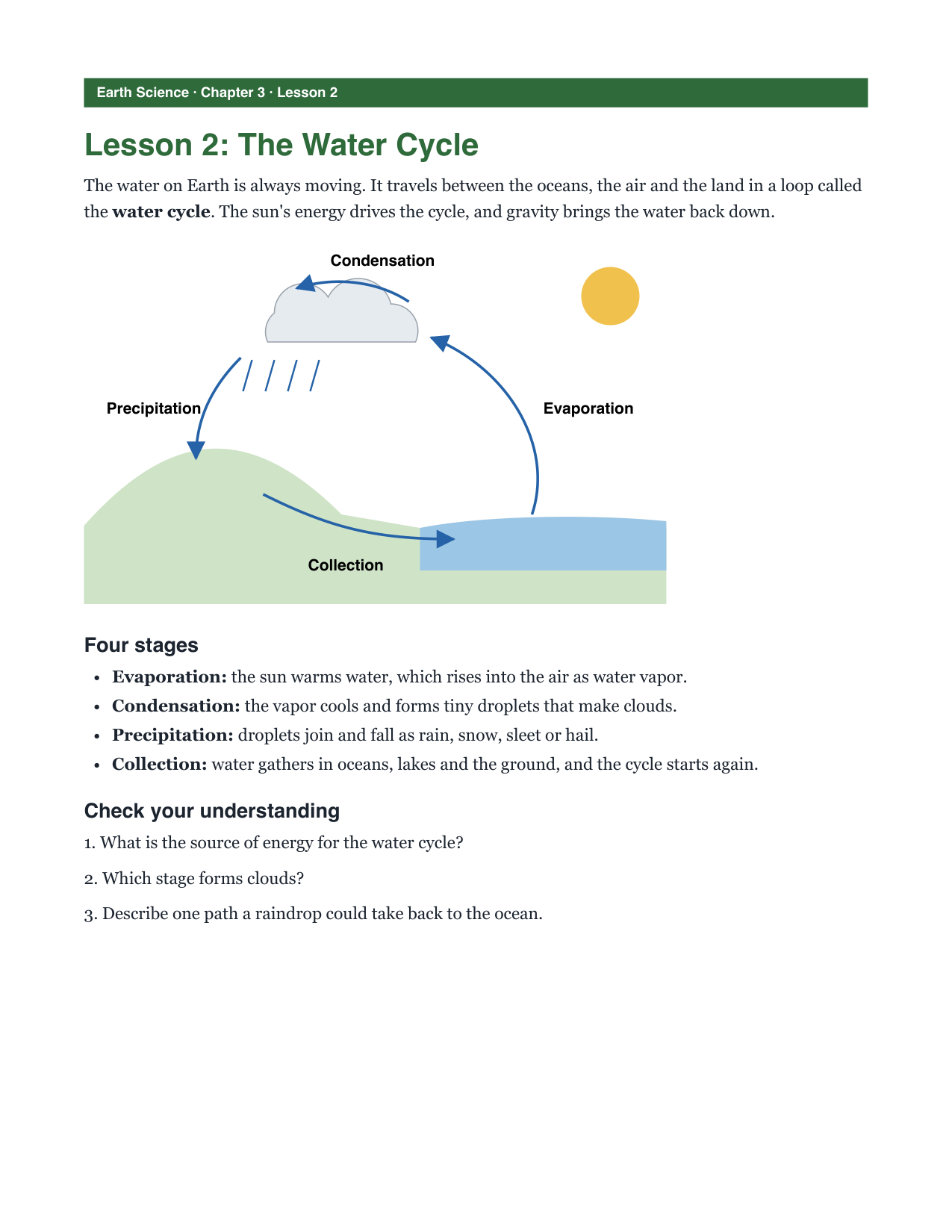
The sample is an earth science textbook page with a labeled diagram and key terms. It is not a finished textbook production case study.

Lesson 2: The Water CycleSample document
Page 1 of the lesson "The Water Cycle": a labeled diagram of evaporation, condensation, precipitation and collection, four stages described in text, and questions to check understanding.

This example demonstrates the generated formats; production integration is scoped separately.

Ask Morf

Questions about your workflow?

Ask about publishers workflows, formats, pricing, or the next practical step.

Supported and trusted by

  • University of Maine
  • Northeastern University
  • Douglas County School District
  • Mississippi Schools for the Deaf & Blind
  • Maine Technology Institute
  • The Roux Institute
  • The IRIS Network
  • Inclusio
  • ACT
  • National Braille Press
  • National Institutes of Health
  • National Science Foundation
  • SCWIST

Want to see Morf with your content?

Try a sample of up to 20 pages or 25 MB, or speak to our team about your workflow.