Built by Accessibility Practitioners

We created Morf after seeing firsthand how difficult it is for organizations to provide accessible content at scale. From educational materials and government forms to STEM content and complex diagrams, accessibility remains one of the most persistent barriers to information access.
Today, Morf helps organizations streamline content accessibility workflows and expand access to information for everyone.

Why Morf. Accessibility Shouldn't Be an Afterthought

See platform capabilities on the home page

Morf helps organizations build accessibility into the content lifecycle — so equal access reaches classrooms, workplaces, and public services at scale.

  • Every day, millions of content assets are shared across education, workplaces, and public services — yet many remain inaccessible to people who rely on assistive technology.
  • Automated checkers and green pass indicators do not make content usable. Manual remediation is costly, slow, and difficult to sustain as content volumes and accessibility maturity requirements grow.
  • We started Morf because accessibility should begin with the content infrastructure — structured, reusable, and multisensory-ready — not as an afterthought at the end of a long backlog.

What We Believe

Our work is guided by international accessibility standards and the conviction that equitable access to information is a fundamental right, not a product feature.

Morf's
Core Values

Accessibility is a Right, Not a Feature

Access to information should not depend on how content was originally created.

The UN Convention on the Rights of Persons with Disabilities recognizes that equal access to information is a human right regardless of format or medium.

UN CRPD → (opens in new tab)

Technology Should Support Accessibility Experts

Automation should reduce repetitive work while empowering human expertise.

WCAG provides the shared technical foundation for accessible content. Morf uses automation to accelerate conformance, not replace practitioner judgment.

WCAG Standards → (opens in new tab)

Complex Content Deserves Equal Access

STEM content, diagrams, charts, and technical materials should be accessible to everyone.

Article 21 of the UN CRPD affirms the right to seek, receive, and impart information through accessible formats including digital media, books, and educational materials.

UN CRPD Article 21 → (opens in new tab)

Accessibility Must Scale

Organizations need sustainable accessibility workflows, not one-time fixes.

Lasting programs require embedded policies, repeatable workflows, and organizational planning, not reactive transformation alone.

W3C WAI Organizational Planning → (opens in new tab)

From Research to Platform

From a UMaine research project focused on graphical access to an AI-powered accessibility platform, built across sixteen years of lived experience, research, and innovation.

2010 – 2011

Origin

What started as an academic project focused on graphical elements evolved into a mission to make information accessible for people with visual impairments.

In 2010, Saranya, the wife of UNAR CEO Hari Palani, pursued her Master's degree at the University of Maine under the mentorship of Dr. Nick Giudice. At their first meeting, she was surprised to discover that Nick was visually impaired when he arrived with his guide dog, Uro. The encounter stayed with Hari, then a software engineer, who grew curious about the tools Nick used to overcome blindness and navigate a world built for sight.

Nick's remarkable journey left a deep impression on Hari. In 2011, Hari left his job to join Nick at UMaine as a graduate student in assistive technologies. That same year, touchscreen devices were everywhere. One of Nick's graduate students, Monoj Raja, was studying how vibration on those screens might convey indoor maps to blind users. With that work as inspiration, Nick and Hari began exploring how the touch and audio capabilities of commercial smartphones and tablets could be leveraged to provide non-visual access to all visual graphical information, not only maps but the diagrams, charts, and graphics that carry so much of what we need to know.

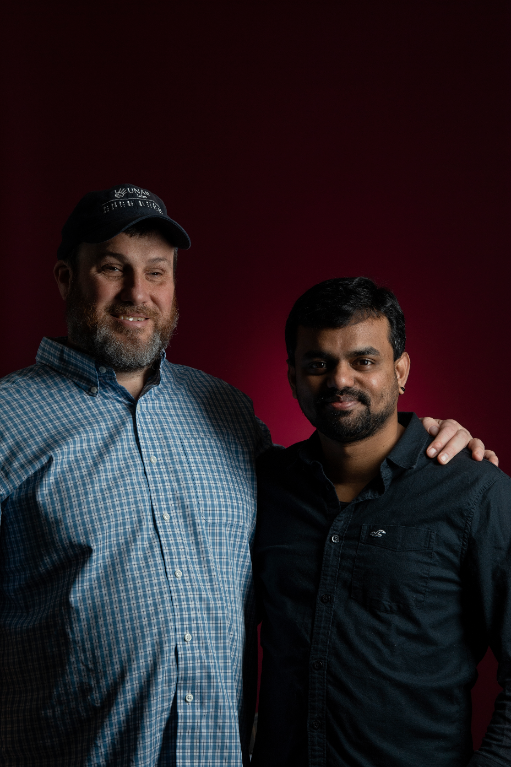
Morf founders Hari Palani and Nick Giudice at the University of Maine
Founders
2012 – 2020

The Journey of Midlina

Midlina brought maps to life through touch and sound on touchscreen devices, then user research revealed how much broader the accessibility challenge really was.

From 2012 to 2018, the team focused on making map information accessible to blind and visually impaired users. They developed Midlina, a framework that dynamically converts graphical media on touchscreen devices into accessible multisensory rendering. After building a beta app to demonstrate Midlina's usability, they came to an important realization: the core problem facing the BVI community extended well beyond maps alone.

As part of the NSF I-Corps program, the team conducted more than 200 user interviews from 2019 to 2020 to understand the ecosystem, existing solutions, and persistent gaps. What they heard echoed the same barriers again and again: high cost, limited portability, incomplete or incorrect descriptions, no real-time results, and the human effort required to author and convert graphics. For blind and visually impaired students, that meant missing key content in the materials everyone else took for granted.

Midlina app converting map graphics for non-visual access
Midlina app for maps
2021 – 2022

The Journey of Morf

CeCe proved that end-to-end accessibility was possible for complex papers, and large language models opened the door to Morf.

In 2021, we concluded that an end-to-end accessibility solution was necessary to fill the gap in math and graphics accessibility. Empowered by advances in computer vision and deep learning, we began prototyping CeCe, an end-to-end solution for making SAT papers accessible. We fully automated the process of identifying, extracting, processing, and converting different content types, from graphics and math to text, and used Midlina to deliver the finished paper to a mobile app.

Then came ChatGPT. It disrupted how we interacted with computer systems and showed the unprecedented power of large language models in understanding context, which revolutionized information extraction from documents. Since 2022, we have experimented with large vision-language models and significantly improved our math and graphics conversion engines, paving the way for Morf, our AI-enabled end-to-end accessibility solution for K-12 curriculum.

Morf logo
Morf, an AI-powered accessibility solution
2023 – Present

Building the Morf Platform

Research pipelines became a production platform — designed for real accessibility workflows at institutional scale.

Morf helps organizations transform inaccessible content while keeping accessibility review and quality assurance at the center. From PDFs and scanned content to equations, charts, tables, and diagrams, teams produce accessible HTML, tagged content, Braille, and tactile graphics for education, government, publishing, and large content collections.

Morf platform
  1. 2023

    Production transformation pipelines move from research into engineering.

  2. 2024

    MorfDocs is launched with Braille workflows, STEM accessibility, and MathML support.

  3. 2025

    MorfDocs partnered with institutions to build accessibility workflows to support students and faculty.

  4. 2026

    MorfAlign is launched as a unified content accessibility platform for institutions to govern their accessibility program at scale.

The Gap Between Accessibility Maturity and Access

Over the years, we worked alongside educators, accessibility professionals, and assistive technology users who faced the same challenge:

Important information existed, but access did not.

The issue was not a lack of intent. It was a lack of scalable tools and workflows. Organizations needed a better way to make accessibility part of everyday operations.

Manual transformation path

  • Each content asset requires specialist tagging, alt text authoring, and structure review.
  • Transformation backlogs grow faster than disability services teams can clear them.
  • Cost scales linearly — more content means more headcount, not more access.

Automated Morf path

  • Batch processing converts PDFs, scans, and STEM content in hours — not months.
  • AI-assisted extraction with CPACC specialist QA maintains quality at institutional scale.
  • Experiences aligned to WCAG 2.2, PDF/UA, and Section 508 with audit-ready documentation.

Built by People Who Understand Accessibility

Our team brings deep experience across WCAG conformance, PDF/UA transformation, STEM accessibility, Braille production, and assistive technology validation — informed by sixteen years of research and practitioner-led QA.

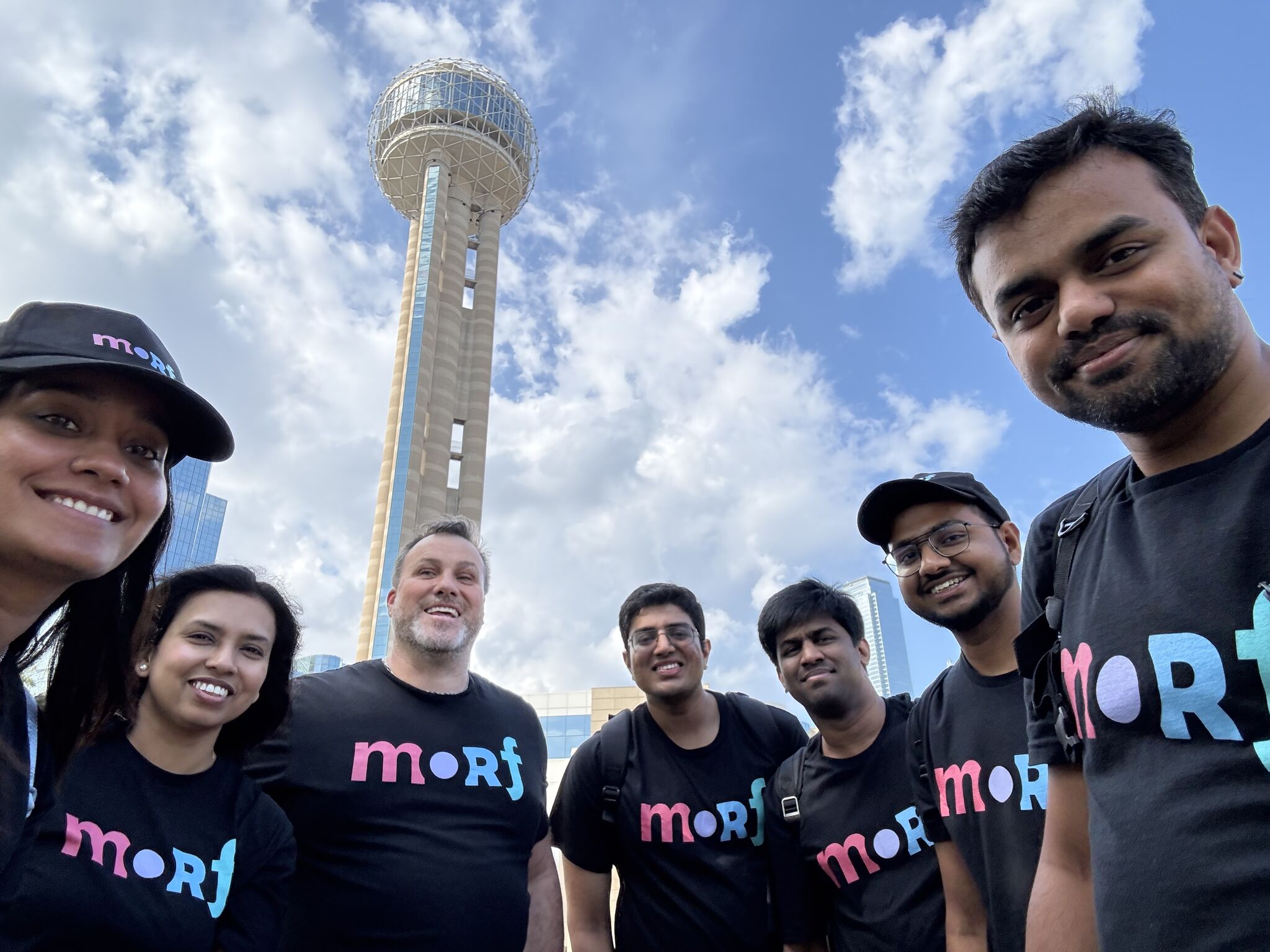
Morf team wearing branded shirts outdoors
People at Morf
  • WCAG & standards conformance

    • WCAG 2.2
    • PDF/UA
    • Section 508
    • ADA Title II

    Transformation aligned to W3C WAI guidelines, ISO 14289 (PDF/UA), and federal accessibility requirements.

  • Tagged PDF & content structure

    • Reading order
    • Semantic tags
    • Alt text
    • Structure tree

    Proper heading hierarchy, table headers, list markup, and artifact removal for assistive technology navigation.

  • STEM & mathematical content

    • MathML
    • LaTeX
    • Equations
    • Scientific notation

    Conversion of complex math, chemistry notation, and STEM figures into formats screen readers can interpret.

  • Braille & tactile production

    • BRF
    • Tactile graphics
    • Embossed output
    • Nemeth

    Born-accessible and remediated Braille workflows for education, publishing, and alternate format production.

  • Alternate formats & EPUB

    • EPUB 3
    • HTML
    • Accessible Office
    • DAISY

    Multi-format delivery from a single source content asset — web, e-book, and transformed Office experiences.

  • Assistive technology validation

    • JAWS
    • NVDA
    • VoiceOver
    • CPACC QA

    Human review by accessibility specialists combined with testing against real screen reader and AT user workflows.

Meet the People Behind Morf

  • Dr. Hari Palani

    Dr. Hari Palani

    Founder & Chief Executive Officer

    Assistive Technology, Spatial Informatics, Human-Computer Interaction, AI-driven Accessibility

    He earned his Ph.D. in Spatial Informatics from the University of Maine and has more than 15 years of experience spanning research, product development, and accessibility innovation. He has led or contributed to roughly $6 million in competitive grants and research support, published widely in accessible technology and nonvisual information access, mentored students and early-career researchers, and served as a reviewer for leading journals, conferences, and federal funding programs. He focuses on designing and deploying systems that make content, graphics, data, and digital media more accessible and usable.

    • Research Scientist at Roux Institute, Northeastern University
    • NIH & NSF-funded research lead
    • 15+ years of experience
    “Every inaccessible experience is a missed opportunity for someone to learn, work, connect, or contribute. Accessibility is how we make sure everyone gets a seat at the table.”
  • Dr. Nick Giudice

    Dr. Nick Giudice

    Co-Founder & Chief Research Officer

    Accessible Multisensory Technology, Improving Information Access for Blind and Low-Vision (BLV) People

    He has published over 150 scientific papers in these areas, collaborated on over $20 million in research grants, has advised over 100 students, and is on the editorial board of two accessibility journals. He focuses on the design and evaluation of accessible multisensory technology and interfaces supporting graphical access, mapping, and the underlying information processing requirements needed for promoting accurate learning and representation of a broad range of information sources.

    • Professor of Spatial Computing at University of Maine
    • 150 scientific papers published
    • Over $20 million in research grants
    “Your life activities primarily rely on vision, while mine primarily rely on touch and audio. Beyond that, there is not much difference, as we both are accessing, inferring, and using the information around us to experience the world and do what needs getting done.”
  • Dr. Joyeeta Mitra Mukherjee

    Dr. Joyeeta Mitra Mukherjee

    Chief Technology Officer

    Generative AI, Accessibility Technologies, AI/ML Governance, Cloud Infrastructure, Security and Compliance

    Technology leader focused on building intelligent systems that deliver high-impact, accessible solutions and enhance human capability and experience. She has led technical organizations from the ground up into execution-ready teams, developing the people, processes, security foundations, and product delivery practices needed to move ideas into deployed systems. With over 17 years of experience across healthcare, MedTech, and enterprise environments, her work spans accessibility technology, industrial AI products, medical technology platforms, secure cloud infrastructure, and SOC 2 Type II readiness and implementation. Her accessibility work extends beyond professional technology leadership into community outreach, promoting inclusive robotics and STEM programs for students with disabilities and families with limited access to advanced technical education.

    • SOC 2 Type II Program Lead
    • Accessibility Technology Expert
    • 17+ years of experience
    “Technology should level the playing field, expand opportunity, and enable innovation by people too often left out.”
  • Ajay Karthick

    Ajay Karthick

    AI Solutions Architect

    Digital Accessibility & Inclusive Design, WCAG/Section 508 Conformance, Accessibility Audits & Testing (JAWS, NVDA), and Accessible Content Transformation (PDF/Word)

    CPACC-certified AI Solutions Architect who builds scalable accessibility solutions that help organizations deliver inclusive digital experiences. He specializes in accessibility automation, WCAG conformance, and content transformation, with a focus on AI-powered workflows that bridge accessibility requirements and practical enterprise implementation. His experience spans accessibility engineering, cloud architecture, and security.

    • CPACC certified
    “Accessibility determines who gets to participate. Technology should work for everyone. I believe great products remove barriers, create opportunities, and enable people of all abilities to engage fully in the digital world.”
  • Keshav Bharadwaj

    Keshav Bharadwaj

    AI Application Engineer

    Multi-Agent LLM Architectures, Content Intelligence & Computer Vision, Generative AI & MLOps Pipelines, and Automated Accessibility Transformation.

    An AI Application Engineer who builds and deploys scalable, autonomous agentic pipelines that automate complex accessibility and content intelligence workflows. Backed by extensive knowledge in Generative AI and deep learning, he specializes in architecting distributed multi-agent LLM systems, multimodal RAG pipelines, and custom computer vision frameworks. He works at the intersection of model development and robust cloud infrastructure orchestrating production-ready microservices, high-throughput MLOps workflows, and parallelized execution loops on AWS to turn intricate accessibility maturity requirements into seamless enterprise automation.

    • Specialization in Applied Generative AI
    • Agentic AI & Multi-Agent LLM Architectures
    “Building intelligent AI systems isn't just about automation it's about engineering the tools that dismantle digital barriers and rebuild a more inclusive world, one layout primitive at a time.”
  • Tharun Ganapathi Raman

    Tharun Ganapathi Raman

    Full-Stack Software Engineer

    Secure Full-Stack Platform Engineering, Cloud Architecture, and Scalable Systems.

    His work spans Software Development across UI & Backend, AWS cloud infrastructure, and platform reliability. He works at the intersection of product engineering, cloud systems, and security-minded architecture, helping turn complex accessibility workflows into reliable, user-friendly digital experiences.

    • AWS Solution Architect Professional
    “Everyone deserves equal access to knowledge that empowers learning and opportunity.”
  • Vanshika Mukesh Kumar

    Vanshika Mukesh Kumar

    AI Research Engineer

    Content Intelligence & Computer Vision, GenAI & Prompt Engineering, Accessibility QA, Research & Development, Startup Operations & GTM Strategy

    Specializing in computer vision and automated digital accessibility workflows, her work focuses on turning complex, exclusionary information assets into inclusive, adaptive learning experiences. From engineering custom computer vision models to building enterprise integrations and managing business operations, she is dedicated to creating a future where digital content is seamlessly usable by everyone.

    • CPACC certified
    “Accessibility isn't something you test at the end of development, it is a fundamental human right. For decades, the digital world has been built for the 'average' user, leaving people with disabilities to navigate systems that exclude them. We don't need more retrofitting; we need to shift left. True inclusion means designing with people, not just for them.”

Building the Future of Accessible Content

Accessibility requirements continue to evolve, but the goal remains the same: ensuring that information is accessible to everyone.

We believe the future of accessibility lies in integrating accessibility into everyday content workflows — making access easier to create, maintain, and scale.

Our mission is to help organizations move from reactive transformation to proactive accessibility.

  • Human review

    CPACC specialists validate critical workflows — not checkbox automation alone.

  • Standards alignment

    WCAG 2.2, Section 508, PDF/UA, and ADA Title II built into every output path.

  • Community involvement

    Active participation in accessibility research, education, and practitioner communities.

Conferences & Partnerships

We show up where accessibility practitioners, educators, and institutional leaders gather — sharing live demos, research, and workflows that scale.

Follow Morf on LinkedIn → (opens in new tab)

Ready to Work with Our Team?

Talk with practitioners who understand your content accessibility program. Explore how MorfAlign can help your organization transform complex content into accessible, adaptable, and reusable information assets.

Talk with Our Team